Brewing your own beer at home is one of those hobbies that sounds intimidating until you actually try it. The truth is, people have been making beer for thousands of years (and it’s perfectly legal in the UK for personal use) with far less equipment and knowledge than you have access to today. Your first batch won’t win any awards, but it will almost definitely be drinkable — and there’s a particular satisfaction in handing someone a pint and saying “I made this.” This guide walks you through the entire process of brewing your first beer, from buying kit to pouring the finished product, with honest advice about what matters, what doesn’t, and where beginners typically go wrong.
Before You Start: What Kind of Brewing?
Home brewing exists on a spectrum from simple to complex, and it’s worth understanding where you want to start. There are three main approaches, each with different equipment needs, time commitments, and learning curves.
- Kit brewing — using a pre-made beer kit (essentially concentrated wort in a can) with added water and yeast; the simplest approach, requiring minimal equipment; good for learning the fermentation and bottling process without worrying about recipe creation
- Extract brewing — using malt extract (liquid or dried) as the base, with the option to add speciality grains, hops, and adjuncts for customisation; more creative control than kit brewing but still relatively simple
- All-grain brewing — starting from raw malted barley and managing the entire mashing process; the most involved method with the greatest creative control and the best potential results, but requiring more equipment and time
This guide covers the process using a kit brew for your absolute first batch, as it’s the best way to learn the fundamentals — fermentation, sanitisation, bottling, and conditioning — without overwhelming yourself with variables. Once you’ve made a few kit brews successfully, moving to extract or all-grain becomes a natural progression rather than a leap into the unknown.
Step 1: Get Your Equipment Together
The good news is that you don’t need much kit to start brewing. A basic starter kit from a home brew shop covers almost everything. Here’s what you actually need for your first batch:
- Fermenting vessel (FV) — a food-grade plastic bucket with a lid and airlock, typically 25-30 litres; this is where fermentation happens
- Airlock and grommet — fits into the lid of the FV; allows CO2 to escape while keeping air and bacteria out
- Siphon tube and bottling wand — for transferring beer from the fermenter to bottles without disturbing the sediment
- Hydrometer — measures the sugar content (specific gravity) of your beer before and after fermentation; this tells you the alcohol content and confirms fermentation is complete
- Thermometer — fermentation temperature matters enormously; a basic stick-on LCD thermometer on the FV works fine
- Sanitiser — the most important single item; everything that touches your beer after boiling must be sanitised; no-rinse sanitisers like Chemsan or VWP are the standard
- Bottles and caps — about 40 x 500ml bottles for a standard 23-litre batch; either buy new ones or save and clean brown glass bottles (avoid clear or green — they allow light to skunk your beer)
- Capping tool — a simple hand capper costs about £10 and does the job perfectly
Complete starter kits from suppliers like The Malt Miller, BrewUK, or Wilko (while they last) typically include everything above for £40-70, often bundled with a beer kit. It’s the most economical way to get started.
Step 2: Choose Your Beer Kit
For your first brew, choose a style you enjoy drinking and stick to a reputable kit. Avoid the cheapest supermarket kits — they produce thin, flavourless beer that puts people off the hobby. Spending £20-30 on a good quality kit makes an enormous difference to the final product.
Recommended starter kit brands:
- Woodforde’s — their Wherry and Nelson’s Revenge kits produce genuinely excellent beer; Wherry is a light, hoppy bitter that’s an ideal first brew
- Mangrove Jack’s — reliable kits with good variety; their Juicy Session IPA is a modern favourite
- Geordie/Muntons — mid-range kits that produce consistent results; good for learning the process
- BrewDog DIY Dog recipes — if you want to move to extract brewing quickly, BrewDog publishes all their recipes free online; not kits per se, but excellent inspiration
For your absolute first brew, a traditional British bitter or pale ale is ideal. These styles are forgiving of minor process errors and taste good over a wide range of conditions. Lagers are harder to brew well at home because they require precise temperature control during fermentation — save those for later.
Step 3: Sanitise Everything
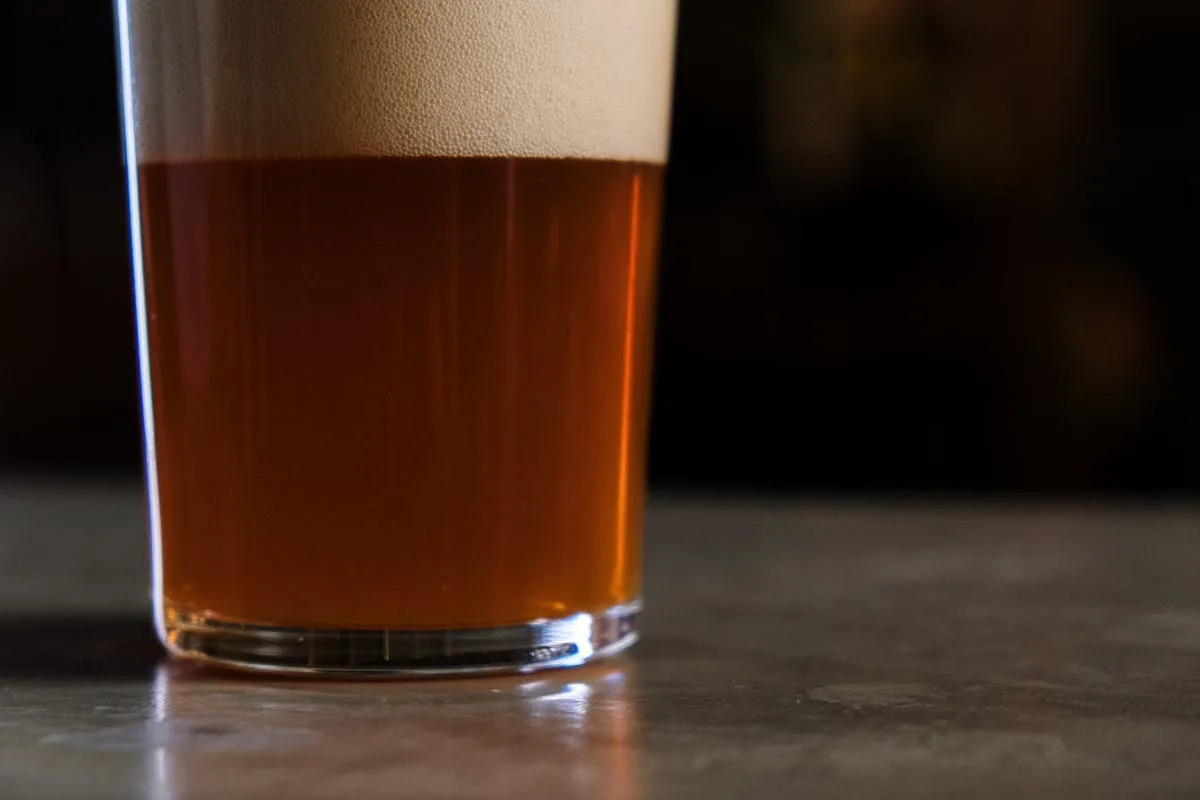
This is the single most important step in brewing, and it’s where most beginner failures originate. Brewing is essentially a controlled biological process — you want yeast to ferment your beer, and nothing else to get involved. Wild bacteria and yeasts will happily colonise your beer if given the chance, producing off-flavours ranging from sourness to a distinct taste of plasters (medicinal phenols).
Everything that touches your beer after the boil must be sanitised. Not “washed” — sanitised. Regular washing-up liquid doesn’t cut it. Use a proper no-rinse brewing sanitiser: mix it according to the instructions, and make sure every surface that will contact your wort or beer is thoroughly coated. This includes the fermenter, lid, airlock, spoon, hydrometer, siphon tube, bottles, and caps.
It feels obsessive at first, but it becomes second nature after a few brews. The mantra “if in doubt, sanitise it” will serve you well throughout your brewing career.
Step 4: Make the Wort
Wort (pronounced “wert”) is the sugary liquid that yeast will ferment into beer. With a kit brew, making wort is simple:
Place the unopened kit can in hot water for 10 minutes to soften the extract inside. Open the can, pour the contents into your sanitised fermenting vessel, and add the amount of boiling water specified in the kit instructions (usually 3-4 litres). Stir thoroughly to dissolve the extract completely. Then top up with cold water to the total volume specified (usually 23 litres). Stir again.
If your kit comes with a separate bag of sugar or spray malt, add this at the hot water stage and stir until dissolved. Many brewers recommend replacing the sugar that comes with cheaper kits with spray dried malt extract (DME) or brewing sugar (dextrose) — this produces a fuller-bodied beer with better flavour. It’s a simple upgrade that costs a couple of quid and makes a noticeable difference.
Step 5: Take Your Original Gravity Reading
Before adding the yeast, use your hydrometer to measure the original gravity (OG) of the wort. Float the hydrometer in a sample of wort and read the scale at the liquid surface. Write this number down — you’ll need it later to calculate the alcohol content of your finished beer. For a related angle, see our Best Malt Extract Kits 2026 UK: Easy First Brews guide.
A typical kit beer will have an OG somewhere between 1.035 and 1.050, depending on the style and how much fermentable sugar is present. The kit instructions will give you an expected OG — if yours is notably different, it usually means the extract wasn’t fully dissolved or the volume isn’t quite right.
Step 6: Pitch the Yeast
Check the temperature of your wort — it should be between 18°C and 24°C for ale yeast (the type supplied with most kits). Pitching yeast into wort that’s too hot will kill it; too cold and it won’t activate properly. This is where the thermometer earns its keep.
Once the temperature is right, sprinkle the yeast sachet onto the surface of the wort. Some brewers stir it in, others leave it to rehydrate on the surface — either works fine. Seal the fermenter lid, fill the airlock halfway with sanitiser or cooled boiled water, and fit it into the grommet on the lid.
Move the fermenter to a suitable location. Temperature stability is more important than hitting an exact number — a consistent 18-20°C is ideal for most ale yeasts. Avoid locations with large temperature swings (like a garage that’s cold at night and warm during the day). An airing cupboard, spare bedroom, or under-stairs cupboard all work well. If your house runs cool, a fermenter heater belt (about £15) wrapped around the FV maintains a steady temperature. Our How to Brew Low-Alcohol Beer at Home guide is useful alongside this.
Step 7: Wait (Patiently)
This is the hardest step for most beginners. Once you’ve pitched the yeast, you need to leave it alone. Within 12-48 hours, you should see the airlock bubbling as CO2 is released — this is fermentation in action. The temptation to open the lid and look is strong. Resist it. Every time you open the fermenter, you risk introducing bacteria.
Primary fermentation typically takes 5-7 days, but the beer isn’t ready at this point. After the vigorous fermentation slows down (the airlock bubbles less frequently), leave the beer for another 7-14 days. This “conditioning” phase allows the yeast to clean up byproducts of fermentation — particularly acetaldehyde (which tastes of green apples) and diacetyl (which tastes of butterscotch). Rushing this stage is the number one cause of off-flavours in home brew.
Total time in the fermenter: 2-3 weeks minimum. Longer is usually fine — the beer won’t spoil sitting on the yeast for up to 4 weeks. Patience at this stage is the single biggest factor in the quality of your finished beer.
Step 8: Check Fermentation Is Complete
Before bottling, you must confirm that fermentation is fully complete. Bottling beer that’s still fermenting is really dangerous — the continuing CO2 production in a sealed bottle can create enough pressure to shatter glass. This isn’t a theoretical risk; it happens, and it’s called “bottle bombs.” We cover a similar decision in How to Brew a Classic English Bitter at Home.
Take a hydrometer reading. Wait two days, then take another. If both readings are the same (or very close) and the gravity has dropped to the expected final gravity (FG) listed in your kit instructions (typically 1.008-1.014), fermentation is complete. If the readings are still dropping, wait longer and test again.
Do not rely on airlock activity to judge fermentation — airlocks can stop bubbling for many reasons other than fermentation being complete (a poor seal on the lid, for example). The hydrometer is the only reliable method.
Step 9: Bottle Your Beer
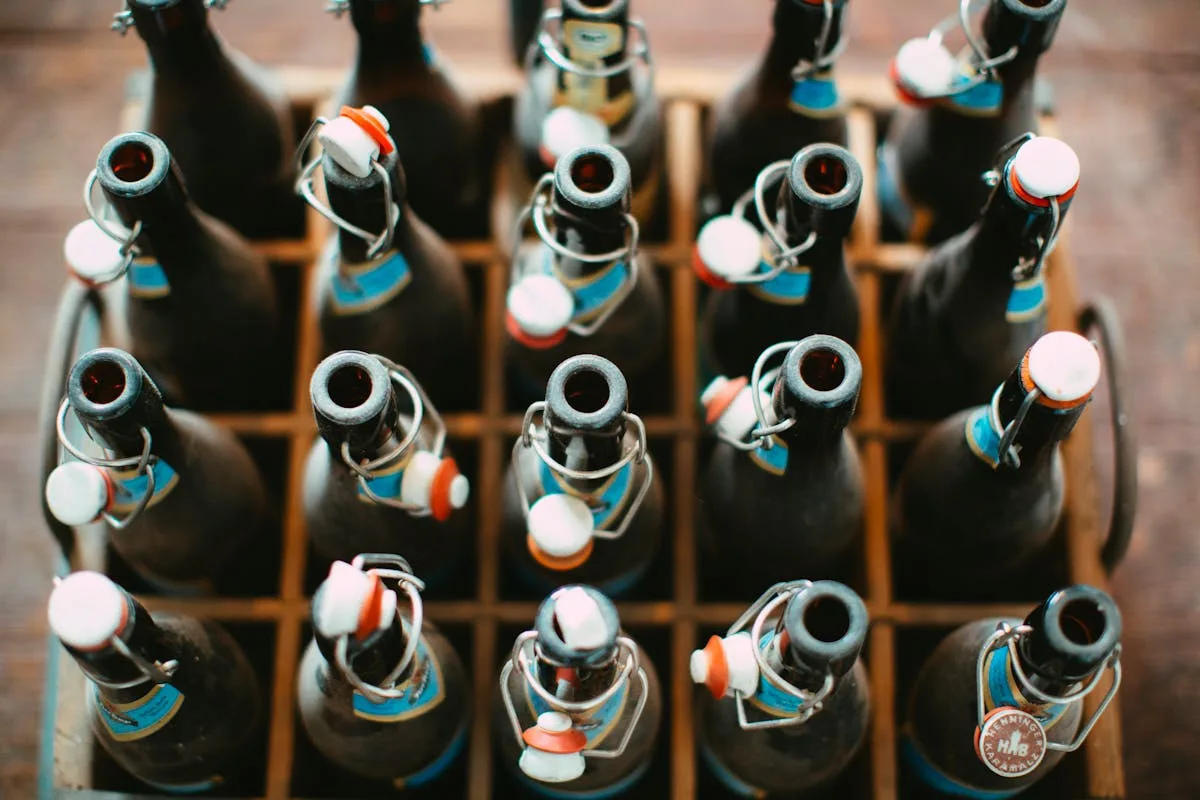
Bottling day is satisfying but requires care and good sanitisation. Here’s the process:
Sanitise all your bottles, caps, siphon tube, bottling wand, and a large jug or mixing vessel. Add priming sugar to each bottle — this provides a small amount of fermentable sugar that the remaining yeast will consume in the sealed bottle, naturally carbonating the beer. The standard amount is half a teaspoon of brewing sugar (dextrose) per 500ml bottle, or you can dissolve the total amount in a small volume of boiled water and mix it gently into the beer before bottling (called “batch priming,” which gives more consistent carbonation).
Siphon the beer from the fermenter into bottles, being careful to leave the sediment (trub) at the bottom of the fermenter undisturbed. Fill bottles to about 3cm from the top to leave headspace for carbonation. Cap each bottle immediately after filling. For independent guidance, check The Homebrew Forum guidance.
Key bottling tips:
- Don’t splash or agitate the beer — oxygen at this stage causes stale, cardboard-like flavours; fill gently from the bottom of each bottle using the bottling wand
- Use brown bottles only — UV light causes a chemical reaction with hop compounds that creates “skunky” off-flavours; brown glass blocks the relevant wavelengths
- Be precise with priming sugar — too much creates over-carbonated, gushing beer; too little produces flat beer; measure carefully
- Keep some headspace — the CO2 needs room; filling bottles to the very top risks over-pressure
Step 10: Condition and Enjoy
Store your bottles upright in a warm-ish place (18-22°C) for at least two weeks. This allows the yeast to carbonate the beer naturally. After two weeks, move the bottles somewhere cool (a garage, shed, or cellar — around 10-15°C is ideal) and leave them for at least another two weeks. Longer conditioning generally produces better beer — four weeks of cold conditioning makes a noticeable improvement to most styles.
When you’re ready to pour, handle the bottle gently to avoid disturbing the thin layer of yeast sediment on the bottom. Pour slowly in one continuous motion, stopping before the sediment reaches the neck. The sediment is harmless (it’s just yeast), but it makes the beer hazy and can affect the flavour.
Your first sip of truly homemade beer is a moment worth savouring. Will it be as good as your favourite craft beer? Probably not — not yet. But it will be yours, and it will be beer, and that’s a genuine achievement.
Common Beginner Mistakes and How to Avoid Them
Every home brewer makes mistakes — it’s part of the learning process. Here are the most common ones and how to dodge them:
- Poor sanitisation — the cause of most bad home brew; if your beer tastes sour, medicinal, or generally “off,” sanitisation is almost definitely the culprit; clean everything first (to remove visible dirt), then sanitise (to kill microorganisms)
- Fermenting too warm — yeast produces more off-flavours (particularly harsh, solvent-like esters) at higher temperatures; keeping fermentation at 18-20°C for ale yeast produces much cleaner beer than letting it rise to 25°C+
- Bottling too early — always confirm fermentation is complete with hydrometer readings; “the airlock stopped bubbling” is not reliable enough
- Impatience — beer improves with conditioning; the difference between a beer at 2 weeks and 6 weeks in the bottle is dramatic; brew multiple batches so you always have conditioned beer to drink while the latest batch matures
- Using cheap kit beer — a £10 kit from the supermarket will produce £10 beer; spending £25-35 on a quality kit produces actually good beer; the cost difference per pint is negligible
- Over-complicating things — your first few brews should be about learning the process, not perfecting recipes; follow the instructions, get the basics right, and experiment later
What Next? Growing as a Brewer
Once you’ve made a few successful kit brews, you’ll naturally want more control over the process. The typical progression looks like this:
First, try enhancing kit brews by adding extra hops (dry hopping), steeping speciality grains, or substituting better yeast. These small modifications teach you how individual ingredients affect the finished beer without changing the entire process. Dry hopping a kit beer with 50g of Citra or Cascade hops, added to the fermenter for the last 3-5 days of fermentation, transforms a basic pale ale into something really impressive.
Next, move to extract brewing — using malt extract as the base and building your own recipe with hops, speciality grains, and chosen yeast. This opens up an enormous range of styles and gives you creative freedom while keeping the process manageable. The equipment cost is minimal — you just need a large pot (at least 10 litres) for boiling the wort with hops.
Finally, all-grain brewing gives you complete control over every aspect of the beer. It requires additional equipment (a mash tun, larger boil kettle, and temperature control for mashing), but many brewers build their systems gradually. The Grainfather and BrewZilla are popular all-in-one electric brewing systems that simplify the all-grain process considerably, though they’re a significant investment at £300-500.
The Bottom Line
Home brewing is easier than you think, more rewarding than you expect, and cheaper than you hope. A basic starter kit and a decent beer kit will set you back about £70-80, and that first batch produces roughly 40 pints — working out at about £2 per pint for truly good beer. Subsequent batches cost even less, as you already have the equipment and only need to buy ingredients.
The key to a good first brew is simple: sanitise obsessively, control your temperature, be patient with conditioning, and don’t overthink it. Beer is a remarkably forgiving thing to make — yeast wants to ferment sugar into alcohol, and your job is mainly to create the right conditions and not introduce anything that shouldn’t be there. Follow these ten steps, give your beer the time it needs, and you’ll have something worth drinking. After that, the rabbit hole goes as deep as you want it to — but that first successful batch is where the addiction starts.
Once you have brewed a first beer, the next step is matching recipes to room temperature and season. Our seasonal brewing calendar explains what to brew each month in UK conditions.
Frequently Asked Questions
What homebrew kit should beginners buy first? Start with a fermenter, sanitiser, thermometer, hydrometer, syphon and bottles or a small keg setup. Keep the first brew simple.
What causes most beginner homebrew problems? Poor sanitation, unstable fermentation temperature and rushing bottling cause most faults. Clean process beats extra equipment.
Is all-grain brewing better than extract? All-grain gives more control, but extract is easier and still makes good beer. Beginners should choose the method they can repeat cleanly.
What should I check first with Home Brewing for Beginners: Your First Beer in 10 Steps? Start with the real use case, then check size, compatibility, running costs and maintenance. A product that looks good on paper can still be the wrong fit if it does not suit the room, routine or budget.
How do I avoid wasting money on Home Brewing for Beginners: Your First Beer in 10 Steps? Avoid buying on one headline feature alone. Compare the practical details, read the warranty or returns terms, and choose the option that solves your main problem rather than the one with the longest specification list.