Knowing how to store hops at home is mostly a matter of keeping them cold, dry and away from oxygen until brew day. Leave an unopened pack sealed in its original barrier packaging; after opening, divide the remainder into small dry portions, remove as much air as your packaging allows, seal it promptly and return it to cold storage. A freezer can be a good home for longer-held hops, while a fridge works for hops you will use soon, provided the packs stay well sealed.
In This Article
- Why hop storage changes your beer
- How to store unopened hops
- How to store opened hop pellets
- How to store whole-cone hops
- Avoid moisture when moving hops from cold storage
- Label, rotate and inspect your supply
- How to store hops at home: choose your routine
- What to do with hops past their best
- Frequently Asked Questions
Why hop storage changes your beer
Hops bring bitterness and aroma through compounds that can change during storage. Warmth, oxygen and time accelerate those changes. The practical result may be weaker or different hop character than a recipe expects. That matters most when the recipe relies on bright, fresh hop aroma, but it can affect bitterness quality too. Storage is therefore part of ingredient care, not an optional bit of cupboard organisation.
BarthHaas’ explanation of hop ageing describes how oxidation changes hop bitter acids and aromatic oils. It also notes that the impact depends on variety, processing, packaging and temperature. That is the reason a single “use within X months” rule is too blunt for every pack in a home freezer. A well-sealed commercial pack and an opened bag folded over with a clip have very different exposure histories.
This is a storage routine, rather than a guide to which variety belongs in an IPA or when to add it to a fermenter. If you need those decisions, use our hop varieties and flavours guide or the separate dry-hopping technique guide. Here the goal is simpler: preserve the character you bought until you are ready to brew.
Three enemies to control
- Heat: cool storage slows unwanted change compared with a warm shelf.
- Oxygen: intact barrier packaging and promptly resealed portions reduce exposure.
- Moisture: dry tools, sound seals and warming unopened cold packs before opening help keep condensation off the hops.
Light matters as well: keep transparent containers inside a dark cupboard or use opaque packaging. None of these steps makes an old pack new again. They protect what remains, with the greatest benefit when you start with fresh, well-handled hops.
How to store unopened hops
Keep the original barrier pack intact
An unopened commercial hop pack may be vacuum-sealed or packed with an inert gas in a high-barrier foil pouch. Its original seal is usually better than a home-made replacement because it was designed and packed as a unit. Keep it sealed until you need the hops. Put the unopened pack inside a clean outer bag if you want to guard against scuffs or freezer odours, but avoid piercing the original pouch or squeezing it against sharp objects.
Read the supplier’s label for the variety, crop year where given, pack date, storage instructions and any best-before statement. The label describes that specific product under its intended conditions. It is stronger evidence than a generic online lifespan claim, but it still depends on the seal remaining intact. If the pack is damaged or has clearly lost its vacuum where vacuum was expected, treat it as opened stock and inspect it rather than assuming its printed date still describes the same conditions.
Choose cold, dark storage
For hops you will keep beyond the next few brew days, a freezer is a practical choice if the packaging is sound and stays dry. A fridge is useful for shorter-term storage or when freezer space is scarce. Either is better than a warm kitchen shelf for preserving aroma, provided the packet is protected from moisture and household smells. Keep it away from the fridge door if repeated warming and cooling would make the environment less stable.
BarthHaas’ storage discussion reports an extended shelf-life statement for its foil-packed, inert-gas-packed pellets held cool. That is a manufacturer claim about a defined packaging and storage regime, not a five-year guarantee for every shop-bought hop pack, nor for pellets repacked in a home kitchen. The sensible rule is to follow the specific pack instructions, retain the seal and judge opened stock separately.
How to store opened hop pellets
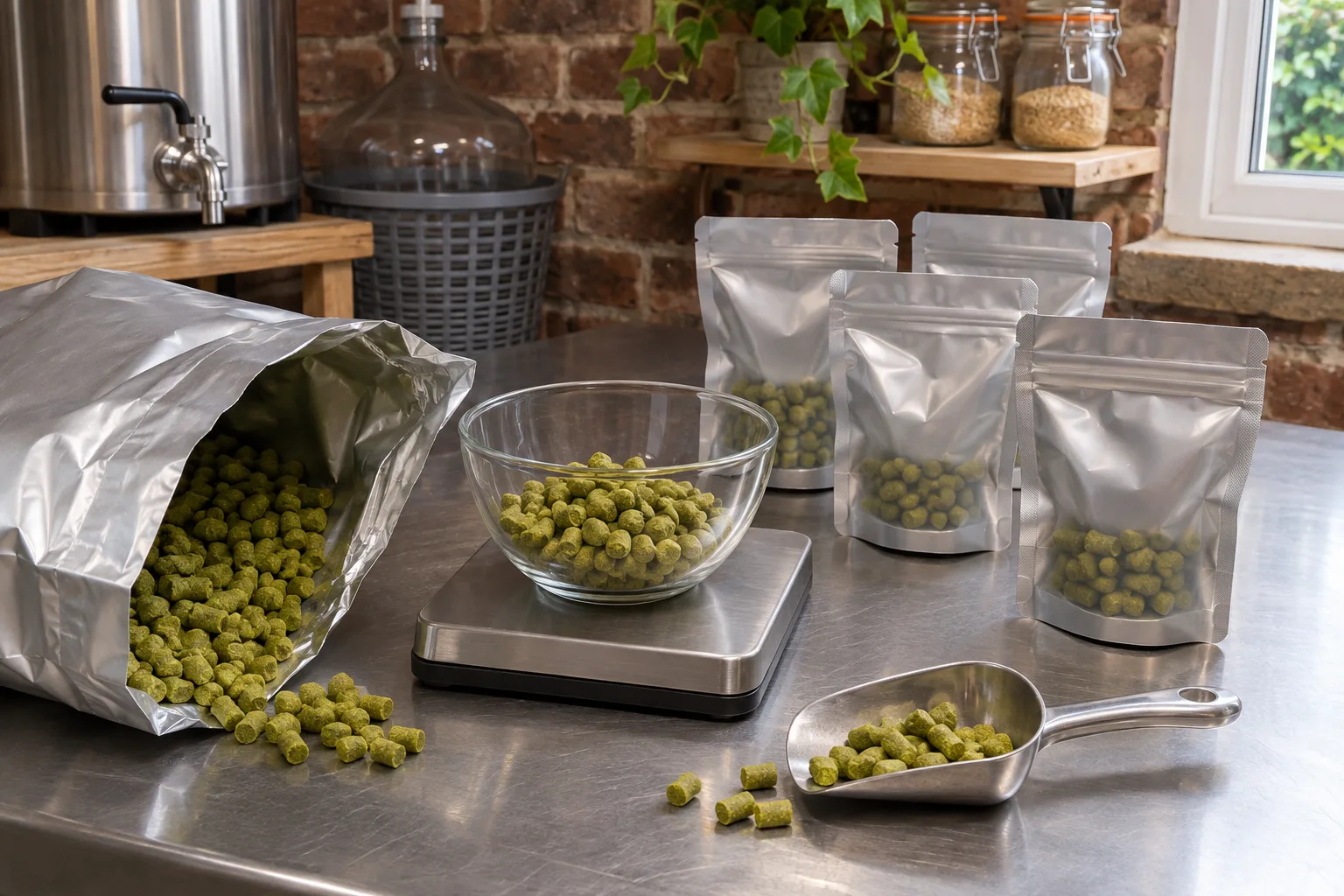
Opening a bag starts a different clock: oxygen enters, the original protective atmosphere is gone, and every later opening repeats the exposure. The easiest improvement is to decide on your next few brew-sized portions while the pack is open. If your recipes tend to use 25g at a time, divide a larger purchase into portions that avoid reopening one large bag for every brew. Keep scales, funnel and containers clean and completely dry.
Portion once, then close quickly
- Use small portions: leave only the amount you expect to use at the next brew readily accessible.
- Choose a sound barrier: an opaque, food-suitable pouch with a dependable seal is more useful than a thin bag with a loose fold.
- Limit trapped air: press out air gently or use a suitable vacuum sealer if you already have one, without crushing a poor-quality bag.
- Label before chilling: add variety, crop or pack date if known, and the date you opened or repacked it.
- Return it to cold storage: avoid leaving the open pack on the bench for the rest of the brew day.
A clip on the original foil can be adequate for a short interval if the opening folds firmly and the pack is protected, but a proper reseal is the more reliable habit for longer storage. Check that a zip or heat seal closes across its full width; hop dust caught in the seam can weaken it. A transparent jar with a tight lid may be convenient for regular use, yet it leaves more air space as the contents shrink and needs dark storage. Choose packaging according to how often you will reopen it.
Keep the storage problem separate from the recipe
Pellet texture may change after exposure and handling. Avoid treating storage as a way to recover a hop whose aroma has already faded. If you are buying ingredients for a specific beer, our UK homebrew ingredient buying guide helps you plan purchases; here the useful choice is buying a pack size you can finish while it is in good condition. A large “value” bag can become poor value if most of it spends months repeatedly opened.
How to store whole-cone hops
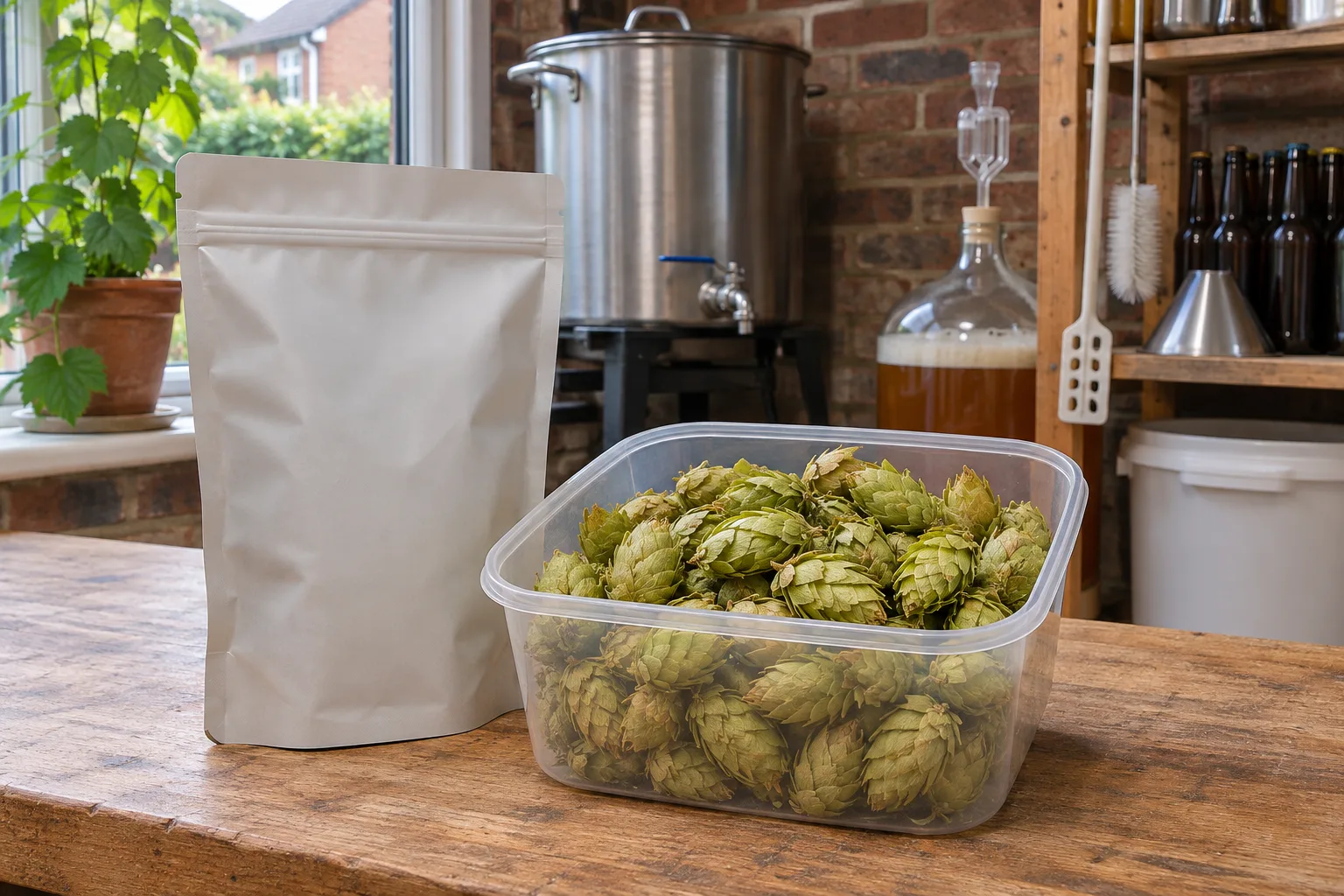
Whole cones take more space than pellets and can be awkward to pack without pockets of air. They also crumble if squeezed hard. Handle them gently, divide them into recipe-sized quantities and use a sufficiently roomy barrier pouch so the seal closes without stray cone material trapped in it. An opaque, well-sealed outer container helps protect the pack from knocks in a crowded freezer. Keep fresh-looking cones and older stock separate so their histories remain distinct.
Do not assume cones and pellets age alike
Processing changes the exposure of hop compounds. BarthHaas notes that milling for pellets disrupts lupulin glands, while good inert-gas foil packaging can protect pellets particularly well. Whole cones may behave differently in air because their glands remain more intact. Neither statement means “cones always last longer” or “pellets always last longer” in a home freezer. The packaging, initial condition and exposure after opening matter too much for that shortcut.
If you grow hops in a UK garden, drying and packaging are separate steps before cold storage. This guide assumes the cones are already properly dried and ready to store; it leaves drying methods and harvest assessment outside scope. Freshly picked, moist cones sealed in a freezer bag are a different material from dry brewing hops. If you are uncertain about a home-grown batch, seek a reliable hop-drying method before storing it for recipes.
Leave room for inspection
An opened whole-cone pack makes visual inspection easier than a compressed pellet pack. Look for the expected cone structure and smell for the variety’s normal character. Some cones naturally vary in colour, so one darker edge alone cannot determine condition. Obvious dampness, visible mould or a musty smell are different: set that material aside rather than gambling a brew on it. Keep the routine practical.
Avoid moisture when moving hops from cold storage
A cold pack brought into a warm kitchen can collect condensation on its outside. If you open it immediately, moisture from the air may also condense around the cold contents and packaging. Let an unopened pack come closer to room temperature before breaking the seal, then take out what you need with dry tools. The key word is unopened: leaving loose hops warming in an open bowl exposes them to air while you wait.
A calm brew-day sequence
- Choose the portion: take out only the packet needed for the recipe.
- Keep the seal shut: allow the closed packet to warm away from splashes and steam.
- Dry the outside: wipe away any surface condensation before cutting or unzipping.
- Open with dry tools: weigh or add the hops, then reseal any unused portion promptly.
- Return the remainder: put it back into its cold, dark place with the label intact.
If you already portioned the hops into single-use packets, the last step may disappear entirely. That is a good reason to portion an opened large pack once instead of cycling it from freezer to kitchen every brew day. Never place an open pouch near boiling wort where steam can enter it. The aim is dry, brief handling rather than a complicated ritual.
Label, rotate and inspect your supply
An unmarked silver pouch becomes a guessing game surprisingly quickly. Write the hop variety and form, crop year if supplied, package or purchase date if known, date opened and the amount remaining. For blends or mixed packets, add the supplier’s exact name. Labels help you avoid using an old opened pack as if it were a freshly sealed one; they also help you find the hops you actually need without opening several bags to sniff them.
Use the older sound pack first
Arrange packets so older opened portions are visible and get considered before newer stock. This is a rotation habit, not an instruction to use poor-quality hops merely because they are old. Keep a small inventory in your brewing notes if you buy several varieties. A line for “opened, resealed, freezer” is more informative than a crop year alone. The beginner brewing guide explains the larger brew-day process; storage records simply make that process less wasteful.
Before use, inspect the seal and smell the hops. Fresh aroma depends on variety, so compare against what that hop should smell like rather than expecting every packet to deliver citrus. A muted aroma may mean reduced impact. Cheesy, stale or strongly musty notes warrant caution; visible moisture or mould means the packet should stay out of the brew. A packet can lose useful aroma without showing a dramatic visual fault, which is why storage history is valuable.
How to store hops at home: choose your routine
The best routine is the one you will actually follow. For a brewer who buys one small packet per recipe and brews within days, leave that packet factory-sealed and cool until use. If you buy several recipes’ worth at once, keep the intact packets in a cold, dark location and open them individually. If you buy bulk pellets, portion the first time you open the package. Repeatedly reopening a single large bag is the weak link to fix.
Fridge or freezer?
A freezer is the stronger default for longer holding of well-packed dried hops; a fridge is convenient for nearer-term use and a small number of packets. Packaging quality and moisture protection matter in both. A badly sealed pouch in a freezer is no magic shield against oxygen, smells or condensation. Conversely, a sound original barrier pack in a cool fridge for a short planned interval can serve well. The question is how long you expect to hold it and how often you will disturb the seal.
Think about the actual recipes you brew. If you brew a bitter with a modest hop bill every few weeks, smaller packets may save more quality and hassle than bulk buying. If you regularly brew hop-forward beer, portioning a larger pack can be sensible. The storage choice should support the recipe, while our dry-hopping guide covers what to do with the hops once they reach the beer.
What to do with hops past their best
There is no responsible universal expiry date for home-repacked hops. Variety, age, temperature, oxygen exposure and packaging all affect quality. The BarthHaas discussion also cautions that a laboratory ageing index does not by itself predict every variety’s brewing result. At home, most brewers have neither the instrument nor a controlled reference sample, so sensible records and sensory judgement do more work than a confident calendar rule.
If a pack has merely lost some brightness, it may contribute less of the aroma you hoped for. For a beer whose appeal depends on that fresh character, choose a better pack rather than expecting a tired one to carry the recipe. If the hops show obvious moisture, mould or a pronounced musty or unpleasant smell, set them aside. Do not turn a suspect packet into a dry-hop addition to “use it up”. There is no quality prize for finishing every bag.
For other flavour additions, including fruit and spices, storage and ingredient selection raise different questions; see our guide to brewing adjuncts. The hop-specific answer is simple: keep factory packaging intact until needed, portion opened material into dry airtight packs, label it, keep it cold and judge the packet you actually have. That routine protects your next brew far better than trusting a universal number of months.
Frequently Asked Questions
Should I keep hops in the fridge or freezer? A freezer is a practical choice for longer storage of well-sealed dried hops; a fridge is convenient for near-term use. In either case, protect the hops from air, moisture and strong household odours.
Can I freeze an unopened packet of hop pellets? Yes, if its original barrier pack is sound and the supplier’s instructions allow it. Keep the seal intact and let the closed packet warm before opening so condensation stays away from the hops.
How should I reseal opened hop pellets? Divide them into dry recipe-sized portions, use sound opaque barrier pouches, limit trapped air, seal fully, label each portion and return it to cold storage promptly.
Do whole-cone hops need different storage? They need more room and gentler packing than pellets. Use dry, well-sealed barrier packaging, avoid crushing the cones and keep them cold and dark.
How long do opened hops last? There is no reliable universal period for home-repacked hops. Their condition depends on the starting material, packaging, temperature and oxygen exposure; inspect the particular pack before using it.
How can I tell whether hops have gone stale? Compare their smell with the expected variety character and check the storage history. Faded aroma suggests reduced impact; obvious dampness, mould or strongly musty notes are reasons to set a packet aside.